
Social Belonging and Exclusion
In Search of Lost TimeAcross salons, hotels, and aristocratic gatherings, characters seek recognition while enforcing boundaries that determine who belongs and who must remain outside.
increasing Bearing strength in each event
 decreasing
Bearing strength in each eventdecreasingThe Verdurin Boundary

Inside and Outside
A chosen circle
The Verdurins gather artists and loyal guests around recurring dinners. Members are praised as intelligent, while outsiders are often dismissed as bores.
Belonging as distinction
The circle’s identity depends on exclusion. Its members gain intimacy and status by sharing judgments about those who are kept out.
The Princess’s Isolation
Loyalty Through Exclusion
An ideal member
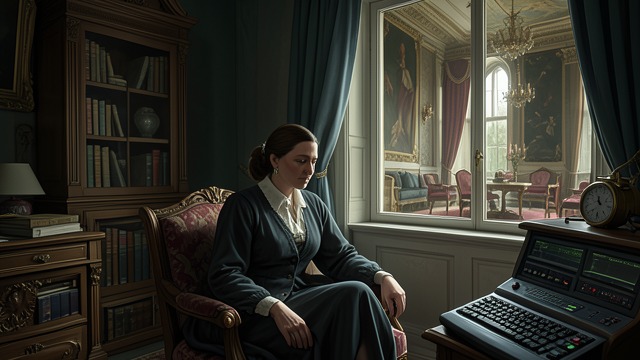
Princess Sherbatoff appears to embody perfect fidelity to the Verdurins. Her social isolation makes the circle the center of her life.
A constrained choice
Her loyalty seems voluntary, but it also reflects a lack of other welcoming relationships. The salon interprets exclusion as proof of devotion.
Charlus Enters the Circle
A Stranger Becomes Faithful
A new guest
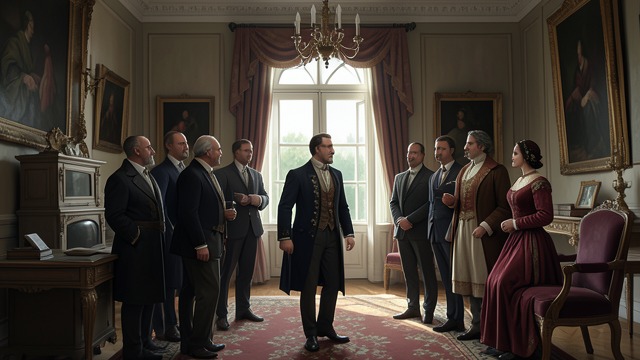
Palamède de Charlus enters the Verdurin salon through Morel. The Baron’s rank and hidden life make him both intriguing and difficult to classify.
Conditional welcome
Madame Verdurin welcomes him because of his value to Morel and the group. Acceptance does not mean that she understands his world.
The Cambremers Refuse the Circle

Selective Association
Invitations withheld
The Cambremers limit their contact with the Verdurins and invoke social distinctions to explain their distance. The salon’s success does not erase established boundaries.
Mutual judgment
Each household sees the other as deficient in taste or rank. Their conflict shows belonging as a contest rather than a neutral invitation.
A Change of Social Direction

Membership Becomes Currency
Prestige circulates
People once dismissed as outsiders gain status when prominent guests begin visiting them. The same individuals can be excluded in one setting and admired in another.
No stable center
Social belonging shifts with fashion, invitation, and personal advantage. The novel’s salons expose class identity as a moving relation rather than a fixed essence.
During the Paris Wednesday dinners
During the summer at La Raspelière
At the first dinner with the Cambremers
Later in the Balbec season
As the season progresses
